Laboratory disposables are often bought by the case, but the lowest unit price is rarely the whole purchasing decision. Gloves, protective garments, wipes and covers touch different processes. A glove suited to routine handling may be inappropriate for a particular chemical. A wipe that removes visible residue does not automatically disinfect a surface. A coverall that fits one team member may leave gaps on another. Start with the task, the hazard assessment and the exact product specification, then compare pack sizes and delivery options.
This guide helps purchasing teams build a clear brief for Lab Supply's disposables range. It is a procurement aid, not a substitute for your laboratory's safety procedures, chemical compatibility data or infection-control requirements.
Map the task before choosing a product
List the work area, what the item will contact, the length of use and whether the product is single use or expected to last through a longer task. Identify relevant chemical, biological, splash, particulate and contamination-control considerations. Ask the person responsible for the work area which standard operating procedure applies. A specimen-handling bench, a wash-up area and a general storeroom can all need different products even when the purchase order uses the same word, such as “gloves”.
Record the required size, material, colour, thickness or weight, packaging format and any documented performance standard. Where a product is described as sterile, medical grade, anti-static or suitable for a particular hazard, request the actual manufacturer documentation for the supplied variant. Avoid transferring a certificate from a different model or assuming that a product title establishes its performance.
Choose gloves by material and exposure
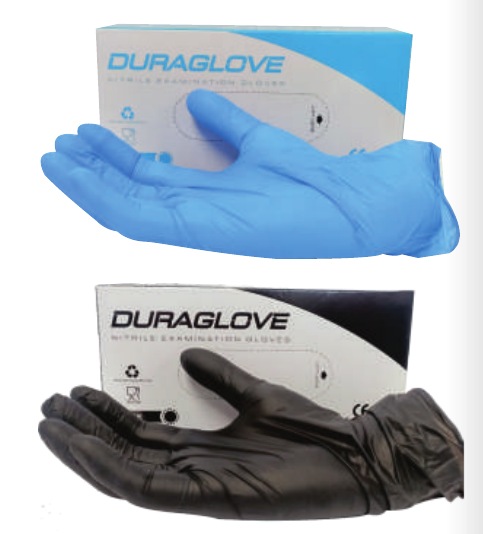
The catalogue includes disposable nitrile gloves, powdered latex gloves, unpowdered latex gloves, polyethylene gloves and a separate chemical nitrile glove. These are distinct listings with different stated materials, dimensions and weights. Do not treat them as interchangeable simply because they cover the hand.
For chemical work, identify each substance, concentration, expected contact duration and whether immersion or incidental splashes are possible. Review the supplier's chemical resistance and breakthrough data for the exact glove, then apply the laboratory's risk assessment. OSHA's glove selection guidance explains why chemical mixtures and contact duration matter. Latex also requires attention to staff sensitivities; the CDC's diagnostic laboratory guidance discusses material alternatives and allergy assessment. Confirm box quantity, size mix and whether a glove is intended for a medical or general work process before quoting.
Match garments to the actual exposure
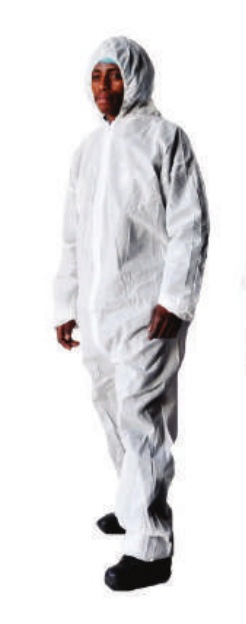
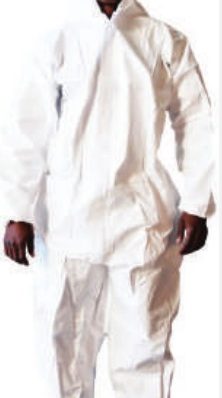
A non-woven lab coat, non-woven coverall, microporous Type 5/6 coverall and PE apron solve different coverage problems. Check where protection is needed: front torso, sleeves, legs, head or the whole body. Check closure, cuff design, garment dimensions and the size chart, not just the nominal size label. A light disposable garment is not automatically a chemical barrier or a substitute for a laboratory coat specified in a procedure.
The microporous coverall listing reports Type 5-B and Type 6-B claims from its catalogue image. If those classifications determine your purchasing decision, request the declaration and test documentation for the exact variant before use. The World Health Organization's laboratory biosafety manual emphasizes selecting protective equipment through the facility's risk assessment. It does not make every listed garment suitable for every laboratory.
Separate cleaning from disinfection
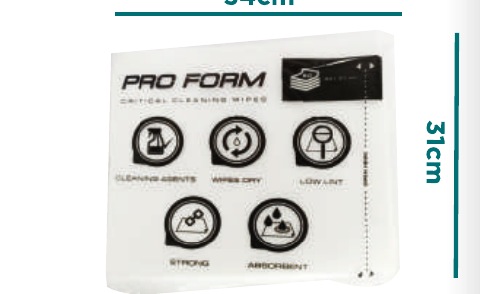
The range includes critical cleaning wipes, extended use wipes, multi-purpose wipes, microfibre cloths and disinfectant wipes. Their listed substrate, size, fold, GSM and packaging differ. Those physical details can affect handling and consumption; they do not, by themselves, establish a disinfection claim.
For a disinfectant, ask for the active ingredient, use instructions, compatible surfaces, the organisms covered by its label and the required wet contact time. The product page for Lab Supply's disinfectant wipes currently describes the wipe substrate and roll format but does not state a disinfectant formulation or contact time. Obtain that information before selecting it for a regulated cleaning protocol. CDC guidance says the surface should remain wet for the labelled contact time. For routine cleaning, check whether the wipe leaves lint, tolerates the cleaning agent and suits the equipment manufacturer's instructions.
Size, packaging and colour are operational specifications
Consumable orders often fail because a “box” or “roll” means different quantities across products. Record units per inner pack, packs per carton, sheet count or roll length, and the size distribution needed at each site. For example, the Disinfectant Wipes listing describes an 800-sheet roll with a dispenser bucket; several garment pages give dimensions but not carton quantities. Request the missing packaging information on the quote instead of assuming it.
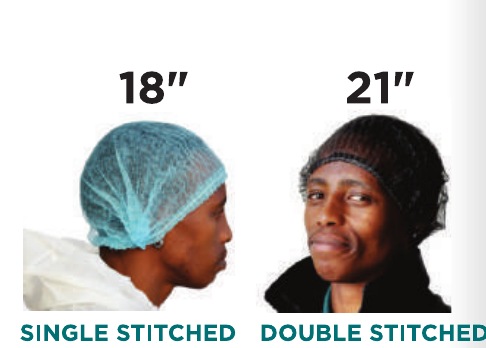
Colour can help a lab separate work zones or tasks, but it only works if the facility's own procedure defines the system. The catalogue shows multiple colours for mob caps, PE aprons and some wipes. Specify the exact colour and size combination in the purchase brief, then verify that combination is available. Ask about storage conditions, shelf life where relevant and lead times for repeat orders.
A useful quotation checklist
Send your supplier one line per item with: product name and link; intended task; material and required performance documentation; size and colour; pack or carton quantity; monthly consumption; delivery location; and any substitute rule. Add a request for a current datasheet when protective or disinfectant performance matters. This makes it easier to compare quotes without accidentally accepting a different thickness, size or packaging format.
Lab Supply lists its Disposables category and a quote form for product enquiries. Link the exact products you need in the message, especially when several apron, glove or cover variants have similar names. If a specification is not on the listing, ask for it rather than treating the absence as a product feature.
Explore the main product decisions
For a more focused comparison, use our guides to nitrile, latex and PE gloves, disposable coats, coveralls and aprons, laboratory wipes for cleaning and disinfection and mob caps, beard covers and shoe covers. Each addresses a separate part of the purchasing brief and links to the relevant catalogue listings.
Frequently asked questions
Are all disposable laboratory gloves suitable for chemicals?
No. Suitability depends on the exact glove material and construction, the chemical, concentration, contact type and duration. Check the manufacturer's compatibility data and your laboratory's risk assessment.
Does a “disinfectant wipe” name prove a contact time?
No. Obtain the product's formulation, label and use instructions. The surface must remain wet for the contact time specified for the intended application.
Can a single garment cover every laboratory task?
No. Coverage, barrier performance, fit and documented classification differ. Match the garment to the work-area procedure and the exact supplied variant.