A wipe is only as useful as the job it is matched to. A dry cloth may be suitable for removing loose residue. A manufactured cleaning wipe may help with a specified surface and cleaner. A disinfectant wipe needs an effective formulation, labelled use and enough wet contact time for the intended target. The words “critical”, “extended use” or “disinfectant” in a product name are a starting point for a specification check, not proof that the wipe meets your laboratory protocol. This guide compares the wipes and cloths in Lab Supply's disposables range and explains the questions to ask before ordering.
Cleaning and disinfection answer different needs
Cleaning removes soil and residue from a surface. Disinfection uses a product with an intended antimicrobial action under stated conditions. The sequence, chemistry, contact time and required validation depend on your facility's procedure. CDC guidance on cleaning and disinfecting surfaces says to follow the product label and keep the surface wet for the specified contact time. That principle matters to a laboratory purchasing brief too, though each work area must apply its own validated procedure.
For an instrument, check the instrument manufacturer's instructions before choosing a cleaner or wipe. Some surfaces and electronics cannot tolerate particular liquids, fibres or abrasion. For a regulated process, the work-area owner should specify approved products, frequency, records and any necessary validation. Do not change a protocol solely because a new wipe is available or a product page uses a familiar term.
Compare the physical wipe specification
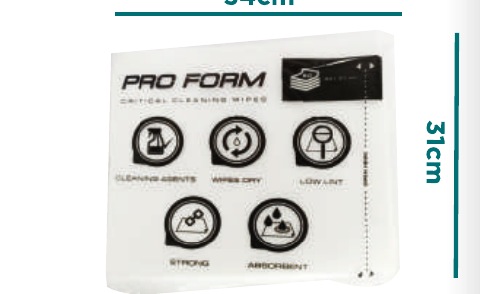
The Critical Cleaning Wipes page lists wood pulp and polyester, hexagon embossing, quarter-fold format, 72 GSM and 34 × 31 cm sheets. The Extended Use Wipes page lists the same broad fibre types but an I-fold format, 120 GSM and 42 × 33.5 cm sheets. Those differences can affect handling, coverage and how many sheets a task consumes. Neither page, on its own, establishes chemical compatibility, sterility, lint performance or a disinfectant claim.
The Duralite Multi-purpose Wipes listing describes three options rather than one: a perforated polyester roll, polyester-viscose quarter-fold sheets and a 100% PET quarter-fold option. Their stated GSM, dimensions and colour ranges differ. Specify the A, B or C option in a quote request. If the work requires a low-lint wipe or a particular solvent compatibility, ask for the manufacturer's relevant test information for that option.
The Microfibre Cleaning Cloth is a different format: 38 × 38 cm, listed as 80% polyester and 20% polyamide, with 200 and 280 GSM colour options. Decide whether it is intended to be washed and reused under your procedure, and ask about laundering limits. A reusable cloth can be appropriate in one setting and unsuitable in another where carry-over between tasks must be controlled.
What to verify for a disinfectant wipe
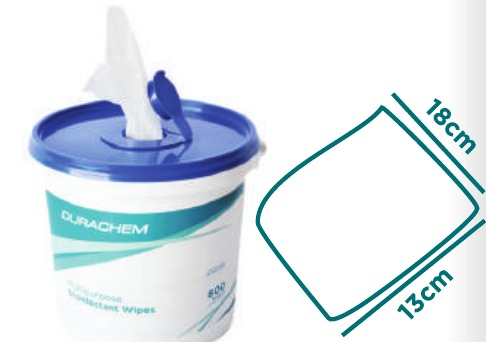
The Disinfectant Wipes page currently identifies a 100% ES-fibre substrate, 25 GSM, 18 × 15 cm sheet diagram and an 800-sheet roll with a dispenser bucket. It does not publish an active ingredient, concentration, target organisms, surface compatibility or wet contact time. Those missing details are essential if the order is intended to satisfy a disinfection procedure. Request the exact label, current datasheet and safety information before deciding on an application. Avoid assuming the wipe can disinfect every laboratory surface or organism.
The supplier's directions should explain how many wipes are needed to wet the surface, whether pre-cleaning is required, how long the surface must remain wet and whether the product must be rinsed from some surfaces. A wipe that dries before the specified contact time has not been used as instructed. CDC's contact-time resource reinforces following the label and keeping wipes from drying in their container.
Build a task-to-wipe table
For each work area, list the surface or object, the residue or hazard, the approved cleaning or disinfection method, the expected frequency and the person who owns the procedure. Then add the wipe requirements: fibre or material, dimension, fold or roll format, colour, compatible solution, pack quantity, and any validated performance claim. This table will show where one wipe can serve several routine tasks and where a separate, documented product is necessary.
Colour coding can help prevent accidental movement between zones, but it only works if the facility documents and trains the scheme. Duralite and Extended Use listings include several colour options. Specify the exact colour and variant rather than assuming every colour is stocked in every format. Track consumption by task: a small sheet used in high quantities may cost more in practice than a larger sheet that covers the area with fewer changes. Conversely, oversized sheets can waste material on small instruments.
Order and storage questions
Confirm sheets per roll or pack, packs per carton, dispenser compatibility, lead time and any storage or shelf-life requirement. Ask whether the quoted product is dry, pre-saturated or intended for use with a separate cleaner. This matters particularly for the page labelled Disinfectant Wipes: the public listing's substrate and bucket information alone do not answer the formulation question. Obtain samples for practical evaluation when changing an established wiping process, then document the result before replacing an approved item.
Use the Lab Supply quote form with links to the exact Critical Cleaning, Extended Use, Duralite or Disinfectant listing you want assessed. Include the missing documentation requirements in the message.
Before switching wipe suppliers, compare the exact sheet size and pack count alongside the stated material. Run a small trial on representative equipment under the approved procedure and note lint, streaking, abrasion and actual sheets consumed. If the proposed product is pre-saturated, confirm whether the solution can be used on every listed surface and whether the storage container keeps it wet through normal use. Record the approved variant so a future reorder does not silently substitute a dry wipe for a disinfectant product.
Frequently asked questions
Does a wipe's GSM show whether it disinfects?
No. GSM describes material weight per area. Disinfection depends on the product formulation and validated use instructions.
Can a cleaning wipe replace a disinfectant wipe?
Only if the local procedure permits it for that task. A dry or general-purpose cleaning wipe should not be assigned an unverified antimicrobial claim.
What is the most important disinfectant-wipe detail to request?
Ask for the exact product label and datasheet, including active ingredient, intended surfaces and target organisms, use method and wet contact time.