Choose laboratory water by the method it must support, not by the label on a purification unit. Start with the water specification in your analytical method or instrument manual, then work backwards through daily demand, feed-water quality and running costs. This guide helps a South African lab turn those needs into a useful quotation brief.
Define the application and its water specification
List every use: glassware rinsing, media and buffer preparation, equipment feed, or sensitive analysis. Record the required water quality, maximum allowable contaminants and any monitoring or recordkeeping requirements stated by your method. One laboratory may need more than one quality at different points of use. Merck’s water-grade overview gives examples of Type 1, 2 and 3 applications; your method’s requirement takes precedence over a general example.
Understand water grades without assuming equivalence
Type 1 is commonly described as ultrapure water for sensitive analytical work, Type 2 as pure water for general laboratory preparation, and Type 3 as reverse-osmosis quality for less demanding uses or as feed to another system. Those names alone do not specify every contaminant limit. State the named standard or instrument requirement in your purchasing brief, including resistivity, organics, microbes or particles where relevant. Do not substitute a supplier’s grade label for evidence that its system meets your method.
Compare the purification route and feed water
Purification systems can combine pretreatment, reverse osmosis, deionisation, UV treatment and point-of-use filtration. The appropriate combination depends on the incoming water and the final specification. Ask for the feed-water limits of the proposed model and check your site supply. A laboratory water still and a multi-stage purification system are different solutions; compare their output specifications, throughput and maintenance for the actual use case.
Size the system for daily and peak demand
Estimate litres per day and the busiest dispensing hour. Include equipment that consumes water continuously, future users, and the distance between the system and each point of use. Ask about storage capacity, dispensing rate and how stored water quality is maintained. A nominal daily production figure may not describe how quickly staff can fill a vessel at the bench.
Compare the full operating cost
Request prices and expected replacement intervals for cartridges, filters and lamps, plus service, monitoring and any required sanitisation. Confirm whether consumables are available locally. Record who will check water quality and what happens when the unit signals that output is outside specification.
Water-system quotation checklist
| Requirement | Details to provide |
|---|---|
| Application | Methods, instruments and points of use |
| Quality | Named standard and required limits |
| Demand | Daily litres and peak dispensing rate |
| Feed | Source and available analysis, pressure and connection |
| Operations | Storage, monitoring, records and consumable budget |
Questions buyers often ask
Does every lab need Type 1 water?
No. The required quality depends on each method and instrument. Supplying a more demanding grade everywhere can increase cost without improving the intended task.
Is the feed-water test important?
Yes. Incoming water affects the treatment configuration and consumable life. Give suppliers current feed-water information and ask them to confirm the limits for the exact unit.
Compare the listed purification routes
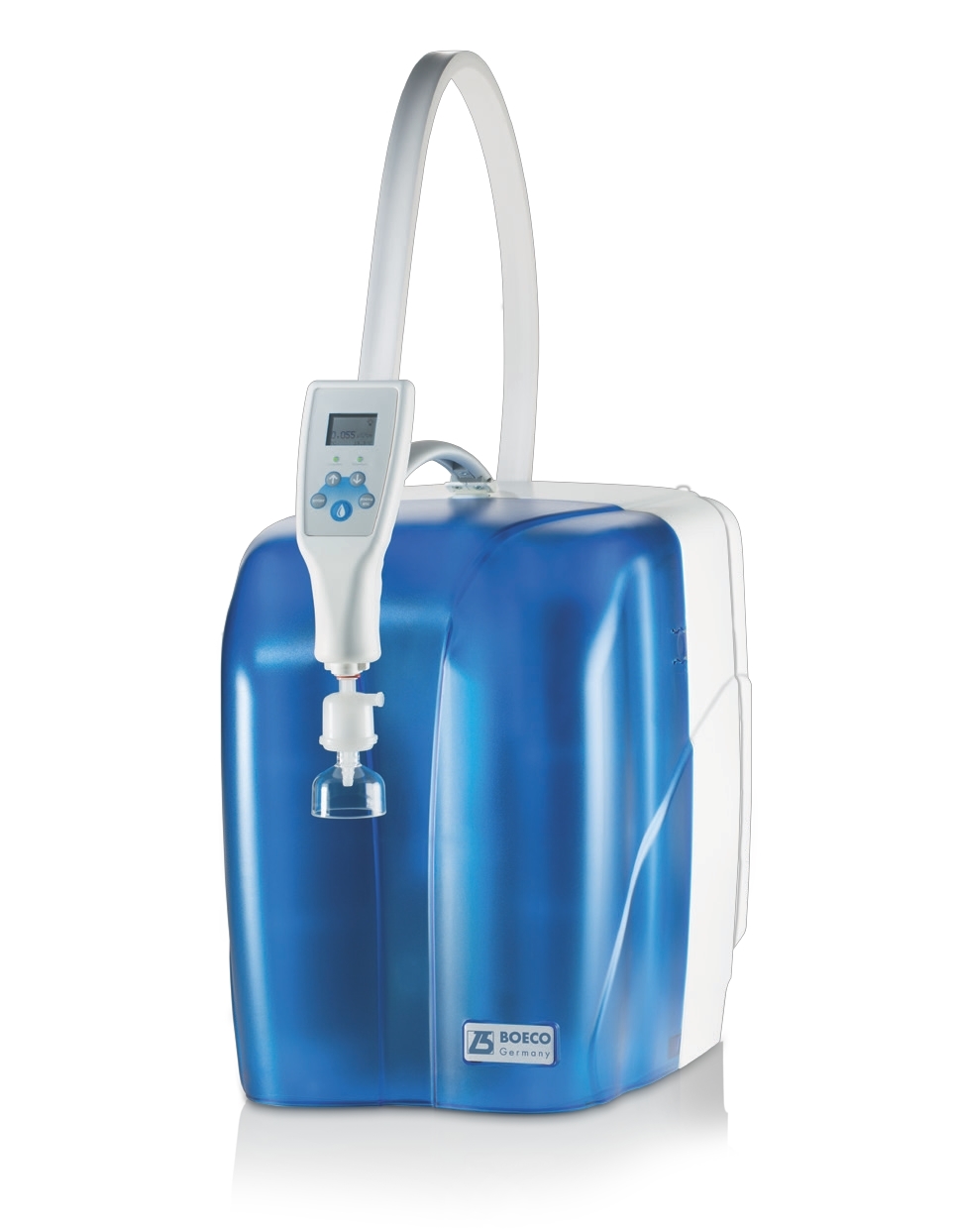
Lab Supply currently lists the BOECOpure PLUS as a system that dispenses ASTM Type I water and maintains a separate 10-litre tank of Type II water. The BOECO DEST 4L water still is a different route: its listing specifies approximately 4 litres of distillate per hour and a conductivity value of 1.5 µS/cm at 20°C. Neither listing alone establishes suitability for a particular analytical method. Send your required water specification, feed-water conditions and daily demand for a current datasheet and system recommendation.
Request a system matched to your lab
Explore Lab Supply’s water-purification range and request a quote with your application, feed-water details and daily demand. We can then confirm the proposed model’s documented output and consumables.